
If you’ve seen Craniosacral Massage Therapy listed as a service and wondered what exactly that means, you’re not alone. Is it massage for your head? Is it similar to a traditional massage? And why would someone choose it?
Craniosacral Massage Therapy is a gentle, hands-on approach that can be incorporated into Registered Massage Therapy. While it feels quite different from what many people typically associate with massage, it offers another option for those looking for individualized care with a lighter touch.
What Is Craniosacral Massage Therapy, and How Does It Work?
At Thrive Massage Therapy & Wellness, our approach is based on the Upledger method of CranioSacral Therapy (CST), developed by osteopathic physician Dr. John E. Upledger.
The term craniosacral refers to the cranium (skull) and sacrum (the triangular bone at the base of the spine). These structures are connected through the protective membranes surrounding the brain and spinal cord, which are cushioned by cerebrospinal fluid.
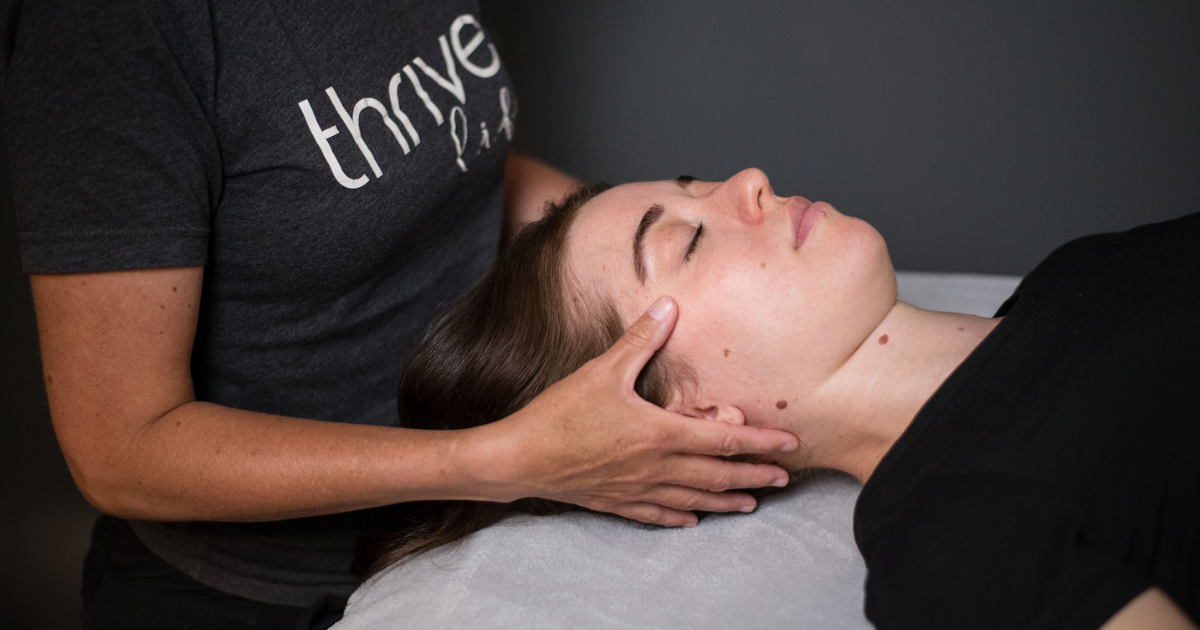
The Upledger approach is based on the theory that subtle movements and tensions associated with this system can be assessed through gentle touch. Practitioners use very light pressure, traditionally described as approximately five grams, along with sustained contact and gentle manual techniques.
Unlike traditional massage, which may involve kneading, stretching or deeper pressure, craniosacral treatment is typically quiet, subtle and slow-paced. Many people find the experience calming and relaxing.
While the anatomy of the craniosacral system is well understood, research has not established that practitioners can reliably detect or alter a distinct craniosacral rhythm through touch. Evidence for CST as a treatment for specific medical conditions also remains limited.
What Does a Craniosacral Treatment Feel Like?
One of the biggest differences between craniosacral massage and traditional massage is the amount of pressure used.
Your RMT may gently place their hands around your head, neck, shoulders, spine or pelvis, maintaining light contact for periods of time rather than using the more familiar movements of a traditional massage.
For someone accustomed to deeper-pressure treatment, the experience can feel surprisingly subtle. Some people enjoy the quiet pace of the session and find it easier to relax without the pressure or intensity of more active massage techniques.
Treatment can often be performed while you remain fully clothed, depending on your individual treatment plan.
Why Might Someone Choose Craniosacral Massage Therapy?
People explore craniosacral treatment for different reasons. Some are interested in a gentler approach to hands-on care, while others are looking for an opportunity to relax or prefer lighter pressure than traditional massage.
People may also inquire about craniosacral techniques when experiencing concerns such as headaches, jaw tension, neck discomfort or persistent muscle tension. Although these are common reasons people seek treatment, research has not established that CST itself is effective for treating these specific conditions.
Your Registered Massage Therapist will consider your health history, symptoms and goals to determine whether craniosacral techniques are appropriate or whether another approach may be more suitable.
Does Gentle Mean It’s Only for Relaxation?
Not necessarily. While relaxation is one reason people enjoy craniosacral treatment, the techniques may also be incorporated into a broader Registered Massage Therapy treatment plan.
It’s a common misconception that effective massage needs to involve firm or deep pressure. Different techniques can serve different purposes, and the amount of pressure used should always reflect your comfort, treatment goals and clinical assessment.
Craniosacral techniques may be used on their own or alongside other massage therapy techniques when appropriate.
Is Craniosacral Massage Therapy the Same as a Regular Massage?
At Thrive, craniosacral techniques are offered within the scope of Registered Massage Therapy. This means your appointment includes the same professional assessment, informed consent and individualized treatment planning you would expect from an RMT.
What differs is the hands-on approach. Rather than focusing on deeper soft-tissue techniques, craniosacral treatment emphasizes light contact and subtle manual techniques. If you’re unsure whether craniosacral massage or another style of massage therapy would be a better fit, your RMT can discuss your concerns and help determine an appropriate treatment approach.
A Gentler Approach to Massage Therapy in Burlington
Not everyone wants or needs deep-pressure massage. Sometimes a slower, quieter treatment experience is exactly what you’re looking for.
At Thrive Massage Therapy & Wellness in Burlington, craniosacral techniques based on the Upledger approach are offered as part of individualized Registered Massage Therapy care by Jennifer Zinn, RMT.
Whether you’re curious about trying something different or looking for a gentler hands-on treatment experience, our team can help you explore whether craniosacral massage therapy is right for you.
Relax. Restore. Thrive.